The region this quarter
Where things stand
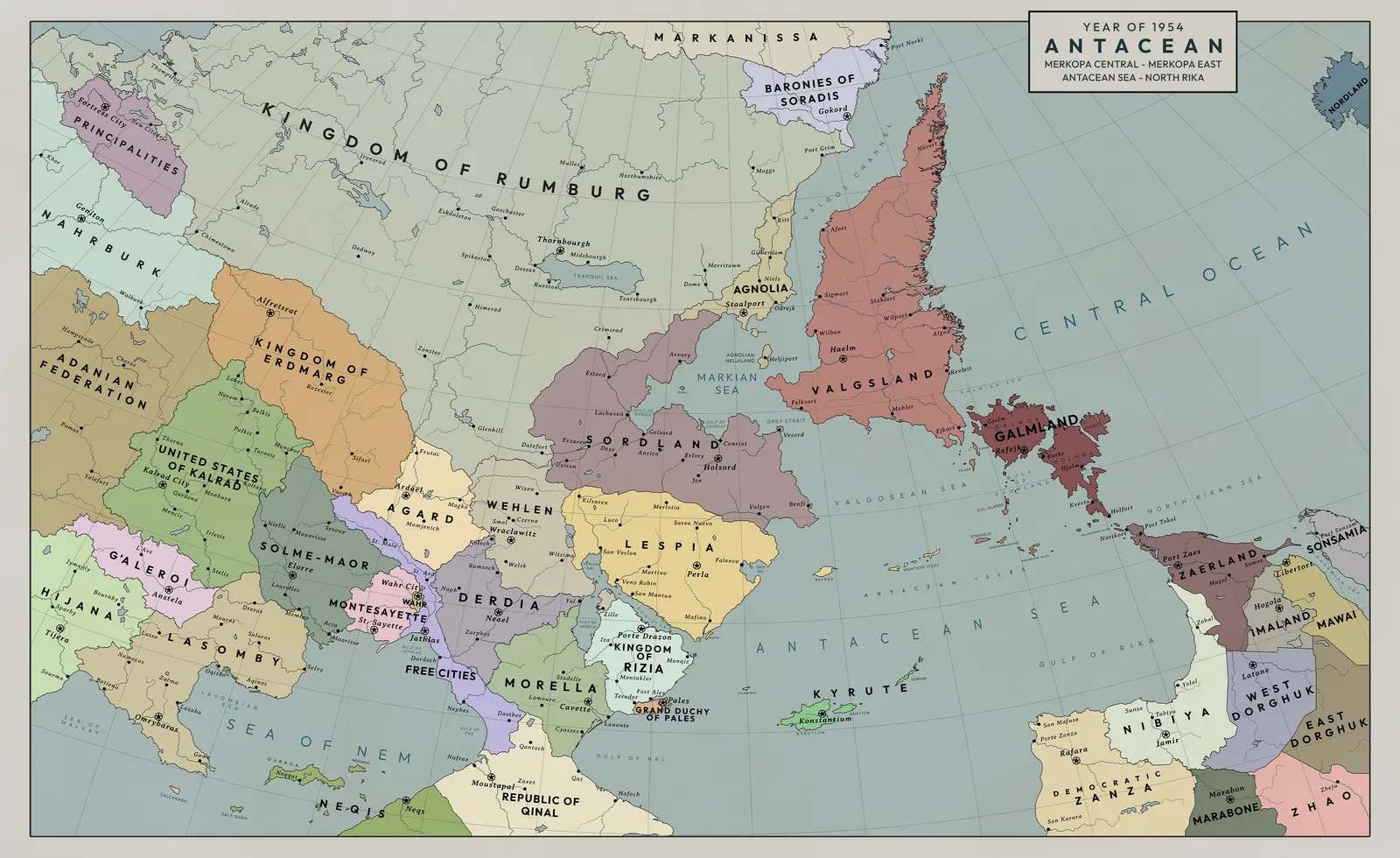
Select a nation for its full file. Rating and year-on-year growth on each label.
League table
Arrows show the change on the previous quarter. Click a column to sort.
World events
World market for nine goods
Prices start at 100 and move each quarter with the gap between what the region produces and what it wants to buy, by up to 25%.
Supply and demand this quarter
Units are % of each nation's GDP at base prices, added up across the six nations.
Economy
Growth, inflation, unemployment and the policy rate, in %.
Society
Approval of each group, 0 to 100. Their weighted average is stability.
Treasury
Share of GDP this quarter.
Army
Resources and stockpiles
Output and use as % of GDP. Stock in % of GDP and in quarters of use. A blockade or embargo cuts imports; stocks cover the gap until they run out.
Orders this quarter
As interpreted by the Umpire.
What the rules triggered
The Terador front: Rizia against Pales
Army steps on each side
One step is a battalion-sized token, as in the Spain 1936 system.
Battle log
Strength = steps on the front × attack value × supply. Pales defends a fortified border (+30%). Each side rolls a d6.
Front pages
One paper per nation, plus The Ekonomists for the region. Headlines follow what happened in the numbers.
How a quarter is played
Each turn is one quarter. Every nation sends its orders in plain words on Discord: raise rates to 8%, print money to pay the army, stockpile grain, ration fuel. The Umpire turns them into numbers, runs the engine, and publishes this portal and the front pages.
Economy
Growth follows spending, interest rates after inflation, and demand from abroad. Inflation follows last quarter's prices, what people expect, how hot the economy runs, the exchange rate and import prices. Printing money adds 2 points of inflation for every 1% of GDP printed. Unemployment falls when the economy runs above its normal pace. Debt grows with the deficit and with interest above growth plus inflation.
Money and the currency
A pegged currency needs reserves. Below 3 months of imports a d20 is rolled: 10 or less forces a 20% devaluation, and the FMA opens a rescue vote among the players. Below 1 month the peg breaks and the currency floats. Above 40% inflation a currency reform is compulsory.
A stabilisation plan brings expectations back to the 3% target after four clean quarters: no printing and a primary deficit of 0.5% of GDP or less.
Credit rating
Ratings come from debt, deficit, inflation, reserves, stability, growth and the external balance, and move one notch a quarter at most. Each notch down raises the interest a nation pays. D is reserved for a declared default.
Society and politics
Six groups react to prices, jobs, growth and specific orders: workers, peasants, middle class, business, military and clergy. Their weighted approval is stability. Below 15 the government falls, in the form the regime allows: snap elections, a palace revolt, a coup or a party purge. Stability then resets to 30.
Resources and prices
Nine goods trade on one regional market. Each nation produces and uses them in its own mix, so a price rise helps exporters and hurts importers. Nations can stockpile or release stocks, and ration. A blockade halves imports and an arms embargo halves arms imports; stocks cover the gap until they run out, then shortages hit growth and the groups that feel them.
War
Armies are counted in steps. Each quarter of fighting both sides roll a d6; losses depend on the strength ratio and the roll. War costs 1.5% of GDP a quarter, drags on growth, scares capital away and blockades the defender.
About this page
The figures here come from an 8-quarter test game with extreme orders, used to tune the rules. They are not a live campaign.